You must have routine sanitation scheduled according to potential hazards, operational volume, food allergen presence, and health inspections, combined with verification documentation supporting food safety protocols, regulatory audits, and government health requirements. The following sections detail critical cleaning system elements.
Key Takeaways
- Brampton's food safety cleaning experts provide services to restaurants, grocery departments, commissaries, warehouses, bakeries, schools, mobile vendors, and allergen-sensitive operations.
- Zone-based workflows clean high-touch surfaces, food-contact equipment, kitchens, floors, drains, restrooms, and storage areas for reducing cross-contamination.
- Verification of proper chemical concentration, appropriateness, and exposure duration is completed by trained providers, with finishing recorded using tests, inspections, and remedial documentation.
- Threat, output capacity, format changes, releases, and regulations must inform cleaning timelines, with daily, weekly, and cyclical operations assigned by location.
- Pick vendors with HACCP, sanitation, knowledge, safety training, preparation, protection, references, coded implements, and inspection-ready hygiene records.
Which Brampton Venues Need Food Safety Cleaning?
You must adhere to food safety cleaning if your establishment is falls under health inspections, food codes, or HACCP protocols. This covers food venues, break rooms, food centers, supermarket areas, butcheries, seafood displays, shops, and commercial food prep.
You also need compliant food safety cleaning in supply warehouses, manufacturing facilities, refrigerated storage, bakeries, school feeding programs, reception facilities, and delivery centers. Portable and seasonal businesses count too, including mobile kitchens, festival sellers, and temporary food stands. If your staff prepare raw materials, portion finished foods, warm up meals, or maintain allergen storage, your facility needs documented cleaning protocols. In Brampton, food safety isn't optional; it's part of statutory, business, and public health compliance.
What Services Do Brampton Cleaning Experts Provide?
Professional cleaning services specializing in Brampton disinfect high-contact surfaces, food preparation areas, ground surfaces, and restrooms in compliance with food safety regulations. Emphasis on these spaces stems from extreme cross-contamination risk, potential for accidents, and compliance issues.
When you understand what they clean, you can verify that your facility's cleaning scope meets operational and regulatory requirements.
Sterilizing High-Touch Zones
Trained Brampton facility managers appreciate that high-touch surfaces call for cleaning since these areas harbor harmful organisms and food particles. You should establish a documented schedule for disinfecting all high-touch items including handles, plates, switches, railings, control surfaces, POS systems, and refrigeration equipment. Employing touchpoint mapping, professionals pinpoint every frequently handled zone and assign cleaning intervals
You should confirm disinfectant properties, solution strength, and necessary dwell time according to manufacturer instructions and food safety requirements. to maintain proper function. Technicians may use swab testing to confirm cleaning effectiveness
Food Prep Areas, Flooring, and Sanitary Facilities
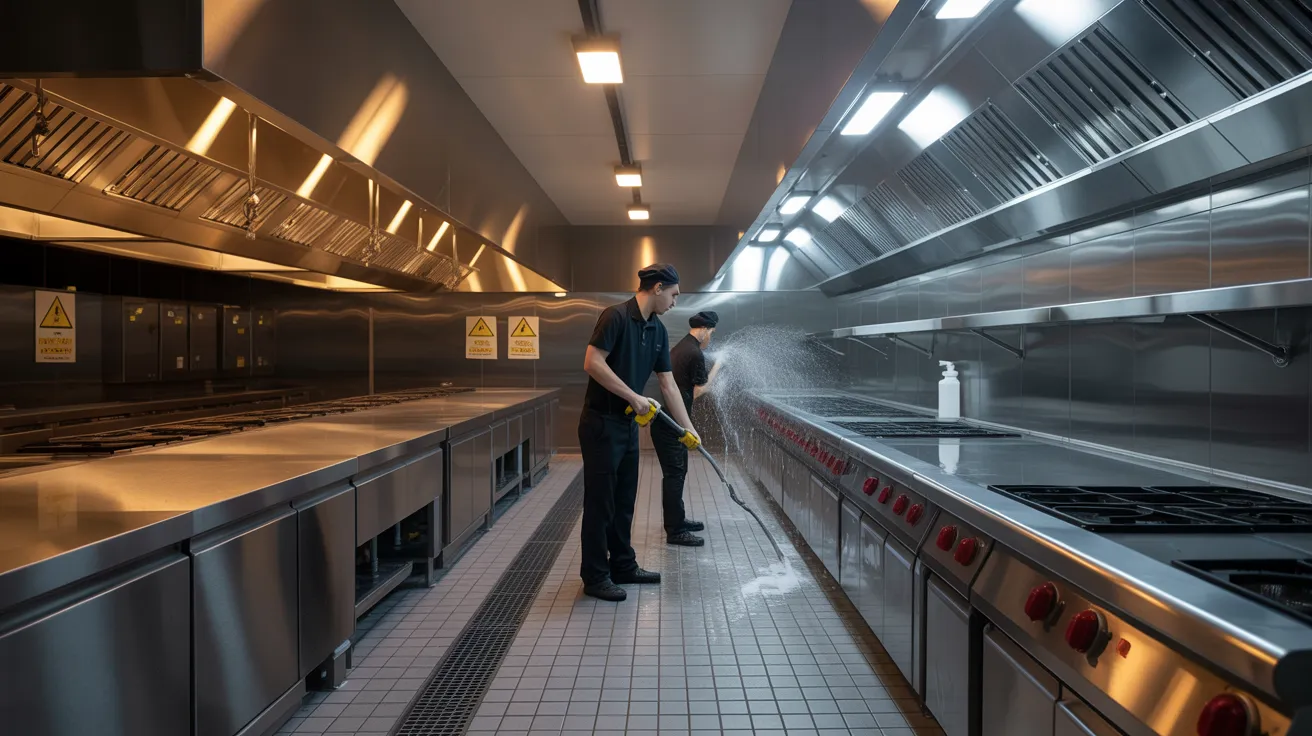
Brampton cleaning services focus on kitchens, floors, and restrooms as each zone presents distinct sanitation, slip-and-fall, and public health concerns. In industrial kitchens, you need grease removal from cooking stations, appliance surfaces, drain systems, preparation areas, and backsplashes to reduce bacterial growth and pest activity.
Documented floor care is likewise provided as part of the service.
Restroom cleaning requires disinfecting touch areas, bathroom equipment, stall barriers, supply stations, and bins, replacing items and managing smells. They also service restaurant moprooms, where chemical storage, sink hygiene, and drainage conditions can affect sanitation compliance and staff safety daily.
How Food Safety Cleaning Benefits Brampton Operations
Brampton facilities require food-safe cleaning standards to fulfill health code requirements and pass inspections. You also reduce cross-contamination by cleaning and sanitizing food-contact surfaces, equipment, and high-touch areas correctly. Most importantly, you safeguard public health by lowering the risk of foodborne illness in your facility.
Regulatory Code Requirements
Food operations in Brampton face mandatory safety protocols, making food safety cleaning essential to meeting health code requirements, safeguarding patrons, and eliminating enforcement action. You must maintain sanitized food contact points, documented cleaning schedules, appropriate product handling, and traceable training practices that comply with municipal and provincial inspection expectations.
Strong cleaning records support you in establishing due diligence during compliance reviews and proving your procedures follow uniform patterns that are reproducible and documented.
Cross-Contamination Prevention
Adhering to regulatory guidelines requires your skill in preventing cross-contamination throughout routine preparation and sanitation work. You need to separate raw ingredients from ready-to-eat foods, sanitize work stations after each task, and keep chemicals away from food-contact items. Organized systems minimize contamination events and ensure consistent compliance during inspections.
You should establish allergen separation to keep priority allergens from contacting common work areas, storage bins, or tools. Use dedicated cutting boards, color-coded tools, and strict utensil labeling so employees avoid combining products throughout cooking or serving. Mandate washing hands following uncooked proteins, shellfish, egg items, or allergen products. Replace wiping cloths regularly, and check disinfectant potency using test kits. When you train staff to follow these controls every shift, you create a cleaner, safer operation that satisfies Brampton's safety standards daily.
Public Wellness Protection
If food safety cleaning deteriorates, you don't merely face potential inspection issues—you amplify the risk of pathogenic contamination harming customers, staff, and the broader Brampton area. You also weaken your role in protecting public health, especially in busy food facilities where contamination can spread quickly through surfaces, equipment, and touchpoints.
You need cleaning protocols that eliminate contaminants, sanitize correctly, and confirm effectiveness. That means following contact times, using approved disinfectants, recording cleaning times, and training staff to meet health-unit expectations. These controls support disease prevention by lowering microbial loads before they reach food or hands. In Brampton, strong sanitation shields at-risk groups, limits outbreak potential, and helps you demonstrate due diligence. When you maintain proper standards, you don't just meet regulations—you actively reduce risk and support safer food service throughout the region.
How Can Cleaning Practices Ensure Food Safety Compliance?
Thorough cleaning protocols ensure food safety compliance by minimizing contamination hazards, limiting pathogen development, and maintaining your facility's adherence to sanitation requirements under HACCP-based programs and public health regulations. You validate that food-handling surfaces stay visibly clean and microbiologically controlled, backing documented preventive controls and inspection readiness.
Cleaning initiatives additionally bolster allergen mitigation by eliminating residues that can provoke undeclared allergen exposure.
When Do You Schedule Commercial Cleaning?
peak production periods, product switches, spill events
bi-weekly timings for drain systems, vents, storage racks, and hard-to-reach zones, based on inspection results and sanitation logs.
Selecting the Right Brampton Cleaning Experts: Key Considerations
Evaluate providers first by sanitation compliance standards rather than price alone. You must ensure each provider understands CFIA, public health, and HACCP-aligned expectations for your business. Request insurance proof, WHMIS compliance, staff training documentation, and supervision methods. Check technician understanding of cross-contamination risks, chemical safety, and documented sanitation practices.
Additionally, you need to evaluate operational reliability and accountability. Obtain references from Brampton food operations, then review service speed, corrective measures, and communication standards. Verify the company supports supplier audits and can deliver inspection-ready documentation when inspectors or external parties need proof. Verify equipment upkeep, colour-coded tools are applied correctly, and site-specific hazards are identified. A qualified provider protects compliance, product quality, and your reputation.
Which components are part of a hygiene cleaning program?
Develop a written plan that makes clear every sanitation responsibility, standard, and task before production begins. You should outline cleaning schedules, authorized chemicals, concentration levels, contact duration, implements, and validation techniques for each location, surface, and apparatus. Include pre-operational inspections, corrective actions, and employee training requirements.
Your plan should also tackle prevention of contamination, waste management, pest-control tactics, and scheduled records for restrooms, drains, floors, and food-contact areas. Specify how you'll separate raw and ready-to-eat processes, support ingredient tracking, and keep accurate allergen labeling through validated cleaning between product changes. You should establish accountability, keep signed records, and evaluate results against regulatory standards, HACCP controls, and customer requirements. When gaps appear, modify procedures immediately and instruct staff.
Regular Asked Questions
Can cleaning services support nighttime operations in Brampton facilities?
Yes, you can arrange sanitation coverage to accommodate overnight shifts in Brampton facilities. You'll arrange nighttime cleaning around operational schedules, security measures, and personnel needs. Services generally outline overnight procedures to reduce disruption, maintain compliance, and record finished work. You should verify arrival timeframes, oversight, lockout procedures, and disposal methods before service begins.
Are hazard containment solutions available from sanitation professionals?
Yes, you can expect many Brampton cleaning experts to provide connected information emergency spill response solutions. They manage hazardous materials, assess risks, contain contamination, and begin swift cleanup to reduce exposure and operational disruption. You should confirm their response times, training certifications, PPE protocols, and waste management. If your facility must meet health or food safety regulations, select a service that documents incidents, maintains regulatory procedures, and enables compliance verification.
Will environmentally safe disinfectants clean safely food preparation areas?
Yes, plant-based sanitizers can be secure for food-handling equipment if you opt for solutions certified for food use and complying with regulations. You should confirm exposure duration, concentration levels, and rinse procedures before implementation. Many plant-derived products lower harsh chemical exposure, but you still need evidence of effectiveness against harmful bacteria. To preserve residue-free areas, you should adhere to exact manufacturer guidelines and verify the disinfecting agent adheres to food industry regulations.
Do sanitation programs support seasonal variations?
Yes, you can tailor cleaning schedules for seasonal shifts. You should adjust intervals, labor allocation, chemicals, and validation steps to fit operational cycles while upholding regulatory adherence. You'll minimize operational delays by organizing sanitation around production shifts, high demand periods, and usage cycles. You should also update SSOPs, employee training, and environmental testing to reflect transient threats, new allergens, or increased soil loads. Continuous reviews preserve your plan efficient.
Do commercial cleaners educate staff on sanitation best practices?
Absolutely, commercial cleaners frequently provide employee education on sanitation best practices. Your staff receives training on proper chemical use, dwell times, cross-contamination prevention, machine takedown, and documentation. They generally match instruction with HACCP, GMP, and CFIA or local public health standards. Many also perform sanitation audits to ensure adherence, identify gaps, and reinforce corrective actions. This enables you to sustain uniform standards, clear audits, and reduce food safety risks consistently.
Conclusion
Partnering with Brampton commercial cleaning and food safety professionals means more than cleaning—it ensures your facility stays inspection-compliant and your standards remain compliant. From processing facilities to kitchens, each sanitized surface and organized section lessens contamination risk and prevents major expenses. By scheduling maintenance on appropriate schedules and executing a comprehensive cleaning strategy, you protect staff, clients, and your image. In a heavily regulated sector, sanitary conditions can't be overlooked—they're vital to proper management.
Comments on “Trusted Commercial Cleaning Team”